Featured

First Blog Post: Introducing Ferrets

Ferrets and other Animals: Introductions

© Lindsey Turner at http://theogeo.com

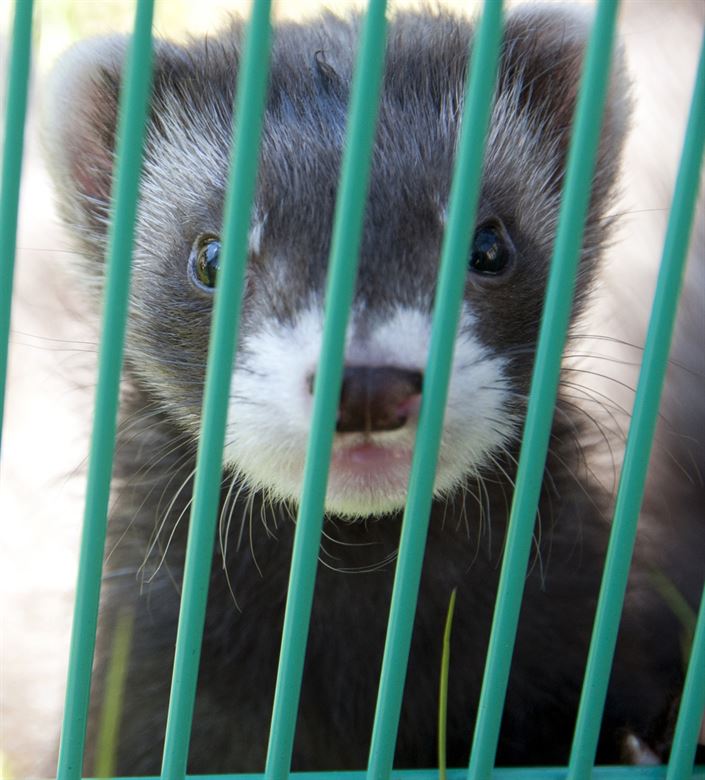
Currently, my household is composed of two cats and a ferret. Chicken, the youngest cat, is extremely close to the ferret. She grooms her, stomps on her with startling force, and accompanies the ferret in her escapades. She even tries to sleep in her cage, which is alarming when I close the cage. I eventually notice the cat is gone, knowingly stick my hand in the ferret cube house, and see her little green eyes next to the sleeping ferret. Our newer cat, Skitz, is learning how to play with her with much confusion. Introducing cats and dogs to a ferret can be daunting but rewarding if it ends in a good way.

Most animals do not view ferrets as prey because their body language does not exemplify that; there are exceptions to this. Some animals and ferrets will not get along. This depends less on the breed and species involved and more on the animals’ individual personalities.

One method of introduction is to just release the ferret in a room with the other animal(s). Less time is needed, but it is more likely to result in a negative outcome. If you do choose this method, be present and attentive the entire time to intervein if necessary.

Look for body language. If you are not familiar with the body language of ferrets or of the other animal, look up videos about it. A google search will also pull up helpful pictures and articles. Never leave animals unsupervised with a free ferret unless you are entirely sure none of them will get hurt.

The more suggested method is to introduce the animals slowly. First, add the animal to a room the ferret has been in but is not at the time. After a day or so of doing that, hold the ferret securely and allow the other animal to sniff its butt. Stop doing so if either party show aggression and continue this until both seem calm. These steps are to ensure they are comfortable with each other’s scents.

From here, you can either have them meet through a fence in the house or in a room supervised. Some adverse reactions should be expected, but they should dissipate quickly and pose no bodily harm. Again, never leave animals unsupervised with a free ferret unless you are entirely certain none of them will get hurt.

Having one animal that is already familiar and friendly with the ferret can be helpful. If a cat sees another cat playing with the ferret casually, then it informs them of the desired dynamic.

As an additional tip, do not let the animals near each other’s food dish at first. Some animals have food aggression that puts any prowlers at risk.
Toilet Goblins

© Lindsey Turner at http://theogeo.com

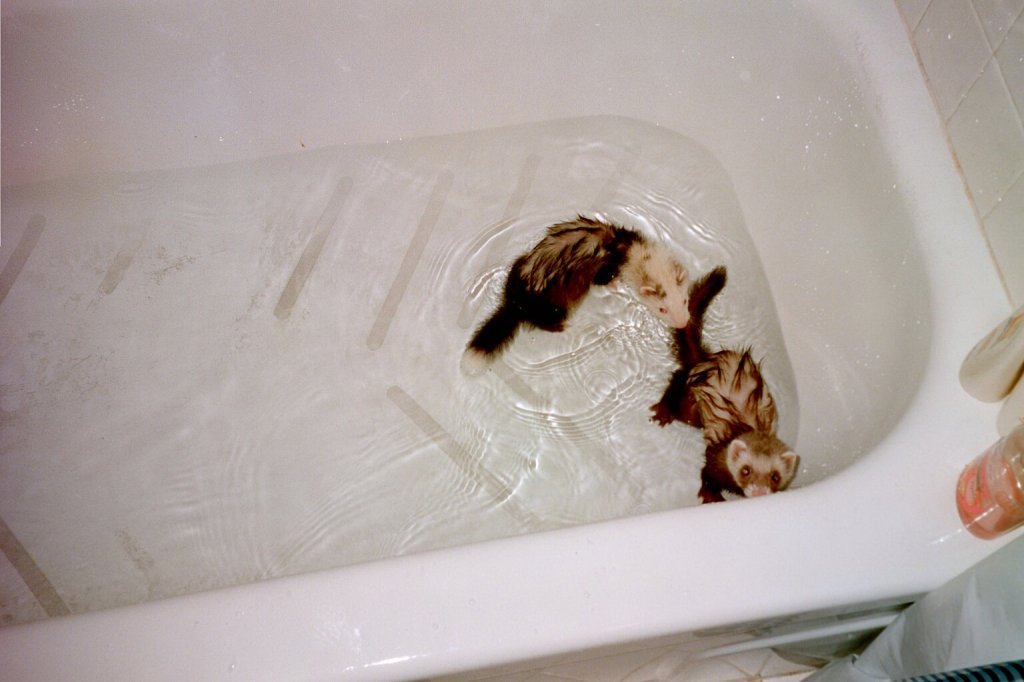
Bathrooms are a tricky thing with ferrets. Maybe it is just Goose, but something seems to invigorate their ferret instincts in this room. Toilet plungers might need to be relocated, and you may have the occasional shower accompaniment.

Below is a list of things that may need to be ferret proofed in a bathroom and is followed by some all too real ferret atrocities.

  • Plungers
  • Stools
  • Cupboards
  • Toilet paper and paper Towels
  • Toilets
  • Showers
  • Anything else they can reach, even if it would take a lot of determination.

Plungers have been a repeated problem with Goose. For reasons, we have two different plungers in our bathroom. Both are a problem, but the accordion plunger is by far the most significant issue. Goose found out it was like a tunnel, one filled with fecal matter remanence, but still a tunnel. I highly suggest profoundly cleaning plungers every time they are used or putting them in a plastic bag and relocating them. Ours now sits in a Walmart bag atop the toilet shelf.

Stools do have a chance of not being a concern, but some ferrets do enjoy them. Solid stools probably will not pose a problem, but anything that a ferret can get trapped under might. Goose enjoys flipping our sesame street stool stand-in for a squatty potty on top of herself. What ensues is an ominous moving stool and a screaming ferret. Occasionally she can get out, but sometimes it seems Grover won’t let her. I suggest either relocating the stool or flipping it upside-down when not in use.

Like with any room in the house, cupboards within about two feet of the ground should be ferret proofed. Any container with a secured lid can be used, and possibly harmful substances can be put in higher territory. Containers with elaborate security measures ought to be used with the smart ones. On an additional note, toilet paper and paper towels should not be put within ferret reach. Goose profoundly enjoys ripping up thin papers; this makes wiping a bit precarious.

Miraculously, toilets have never been an issue with Goose. I frequently have a minor heart attack when she dives under the door to accompany me, but that is momentously better then what is mentioned above. Some owners do have problems with their toilets, though. You just have to make sure the lid is closed. That should be sufficient unless you have an incredibly light toilet lid.

Showers can be a problem, depending on their dimensions. Goose likes to unexpectedly join people in the shower and play with the shower curtain. Putting the ferret in its cage when someone is showering might be the best solution for this issue. Make sure all soaps are out of ferret reach. Regrettably, I have no other recommendations for ferret proofing a shower. Perhaps you should move to a place with an enclosed shower.

Everything else on the ground or in ferret reach also needs to be ferret proofed. Ferrets will have their own shenanigans, so the process is a bit trial and error. Some things will be okay, and others won’t. Even there is a crevice you think does not need to be cleaned, ferrets will find it and get covered in gross things. Ferrets do not abide by the same dimensional boundaries as humans.

Winter is Coming:Storing Food

© This file was created and uploaded by user Szater  to Wikimedia Commons  https://commons.wikimedia.org/wiki/File:Mustela_putorius_furo_(fretka)_na_%C5%9Bniegu.JPG

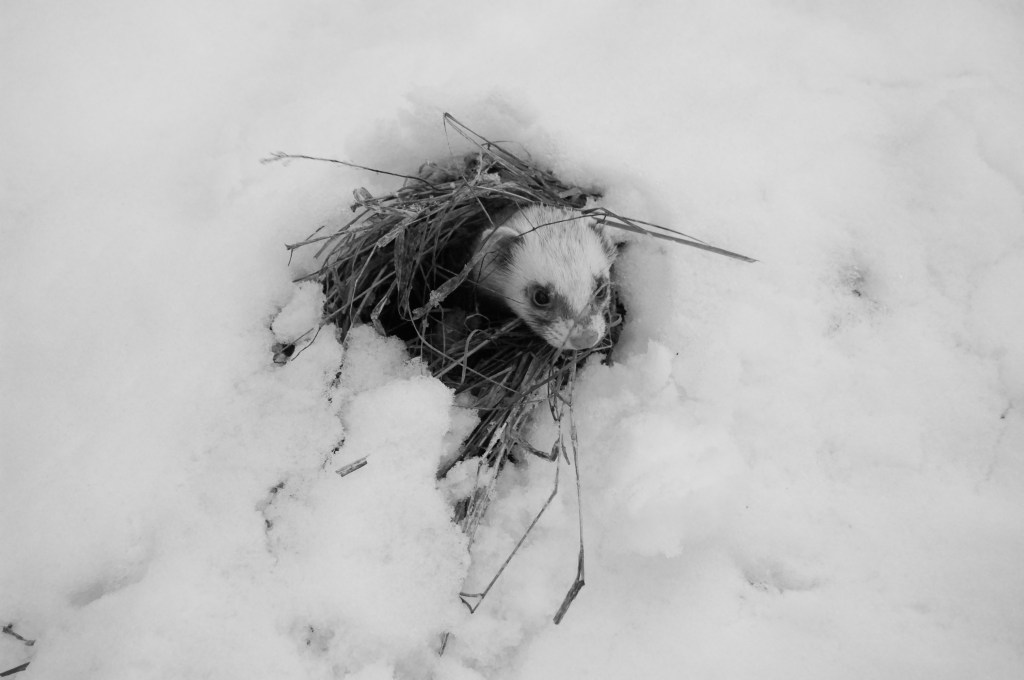
Many animals commence seemingly instinctual habits at the dawn of winter. Indoor or otherwise domestic animals do not really need to follow the actions of their wild ancestors. However, that will not stop them.

Many ferret’s coats will change in the winter. They often become thicker, and the underlayer lightens in color. As this is happening, you might notice a sudden increase in shedding. The colder it is around their enclosure, the more drastic this change will most likely be.

Behavioral habits can also change. Goose has begun storing food. The food inside the cage is unaffected, but the cat food is a different story. She will commence chomping as usual until instincts kick in, she grabs a piece of food, and books it across the room. If one of the people sees it, we triumphantly slide across the room at startling speeds in an attempt to catch her. All selected food has been hidden behind the couch of treasures. Through thorough research, we can conclude that little if any of the couch food gets eaten. She is storing it for harder times.

To rectify this situation, the cat food gets put up when the beast is released.  

Make sure you observe any new habits and always know where their hiding spots are.

Ferrets and Fleas

  © Kat Masback at https://www.flickr.com/photos/36128932@N03/

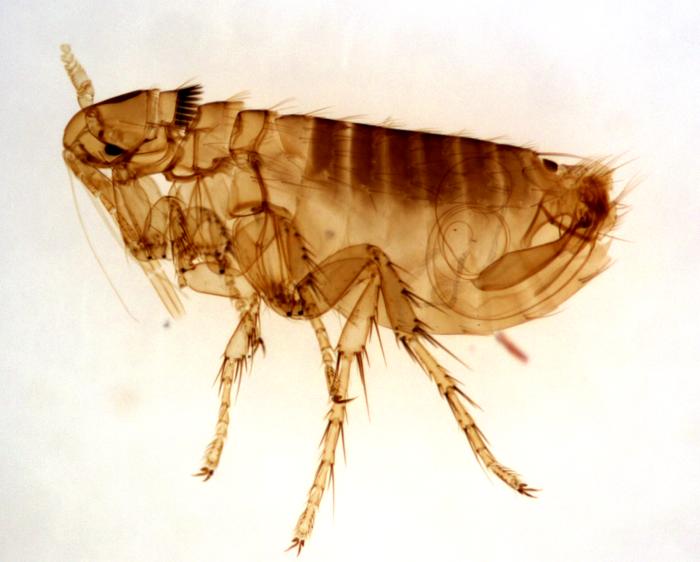
We recently introduced a new cat into our home. He was a stray but had been living under our porch for several weeks. At a vet examination, he was deemed a healthy Maine Coon and dosed with flea and parasite meds. We mistakenly brought him inside after the visit in case he reacted negatively to the medication. The flea eggs laid dormant for a month before releasing little, hematophagy, demon bugs.

Similar actions to the above and any presence of animals that go outside can lead to a ferret flea war.

Treating ferrets for fleas is similar to other domestic animals. However, there are some additional hurdles.

Finding fleas on ferrets is not an easy task. They normally ich quite frequently, so discovering they have fleas usually relies on finding other signs of fleas. The most apparent finding is a flea itself. However, ferret’s plentiful coat makes it difficult to locate and identify a flea. Using flea combs can shorten the search. A common sign is flea dirt, composed of flea poop and dried blood, which looks like tiny dark spots in the ferret’s fur. Flea combs are also useful for locating and removing flea dirt.

If the flea problem escalates, ferrets can develop anemia from blood loss or a secondary infection. Some allergic responses can happen, often in the form of hair loss or sores.

If you are still unsure whether your ferret does have fleas but have reason to be worried, contact a veterinarian.

Getting rid of fleas on ferrets is usually a bit easier than the aforementioned. Two topical cat medications are approved for use on ferrets, which are Advantage® and Revolution®. Only the kitten formula is advised for use on ferrets. Some sources praise flea baths for ferrets, but repeated bathing can severely dry out their skin and further irritation. With any form of treatment, flea eggs that fall of the pet must be exterminated. Most flea eggs can hatch between fourteen to twenty-eight days and live in carpets and on fabrics. Wash ferrets laundry once a week and clean carpets.

Preventative measures are also helpful in avoiding large infestations. If you have any outdoor animals or frequently come in contact with any fleas, treating your animals regularly may be the best method. Also, clean animals beading frequently for flea prevention and general cleanliness.

If you are uncertain if a particular product can be used with ferrets or the flea problem persists, contact a veterinarian.

Works Cited

Anderson, Natasha. “What Is Flea Dirt And What Does It Look Like? – TheBugSquad.” The Bug Squad, 16 Nov. 2019, https://www.thebugsquad.com/fleas/flea-dirt/.

Hess, Laurie, and Rick Axelson. “Fleas in Ferrets.” Vcahospitals, https://vcahospitals.com/know-your-pet/fleas-in-ferrets.

“Flea Infestation in Ferrets.” PetMD, PetMD, LLC., https://www.petmd.com/ferret/conditions/parasitic/c_ft_flea_infestation#.

Temper Tantrums

A predominant problem with ferrets is that they are intelligent and stubborn. This combination creates an animal that correlates what behaviors get them what they want.

Goose has recently taken up some less than delightful techniques to get attention in her cage. The mildest one is climbing up the walls of her cage. Ferrets are not built for climbing well, so she usually falls before reaching the top. The risk of injury is incredibly low in her cage, so only her dignity is at risk. If you have a similar problem with a ferret and are concerned about it, then making sure their nails are trimmed every week. Without their sloth-like claws, their bottom-heavy physic should prohibit climbing. Her increasingly irritating new habit is ripping up her felt bedding. It is usually tucked around the base of her cage to keep it secure. She likes to work at it until she can tunnel under it. As Goose happily chases imaginary rabbits, she relocates everything in her cage. To help, I have tied knots in the bedding to keep it in place. Researching patterns for fleece bedding is very helpful, particularly if you know how to sew.

As a final and most obnoxious habit, she throws full tantrums. Litter is thrown everywhere as the beast digs in it. Thankfully she knows to only throw the litter on the clean side of the box. The ground gets covered in paper litter as well as her cage. How Goose makes this process so loud, I will not know. She will also check to make sure we know she is doing it by looking for people, making the best eye contact she can, and doing it again. So far, the best method to cease this behavior is ignoring her. Within a few minutes, it stops.

From this cautionary tale, please learn to not divulge in their toddler-like behavior. Even if you must put a sign on the cage to alert others not to engage during these fits, do so.  Cease the carnage.

© U.S. Air Force photo by Airman 1st Class Tammie Ramsouer

https://www.jber.jb.mil/News/Photos/igphoto/2000839535/

Design a site like this with WordPress.com
Get started